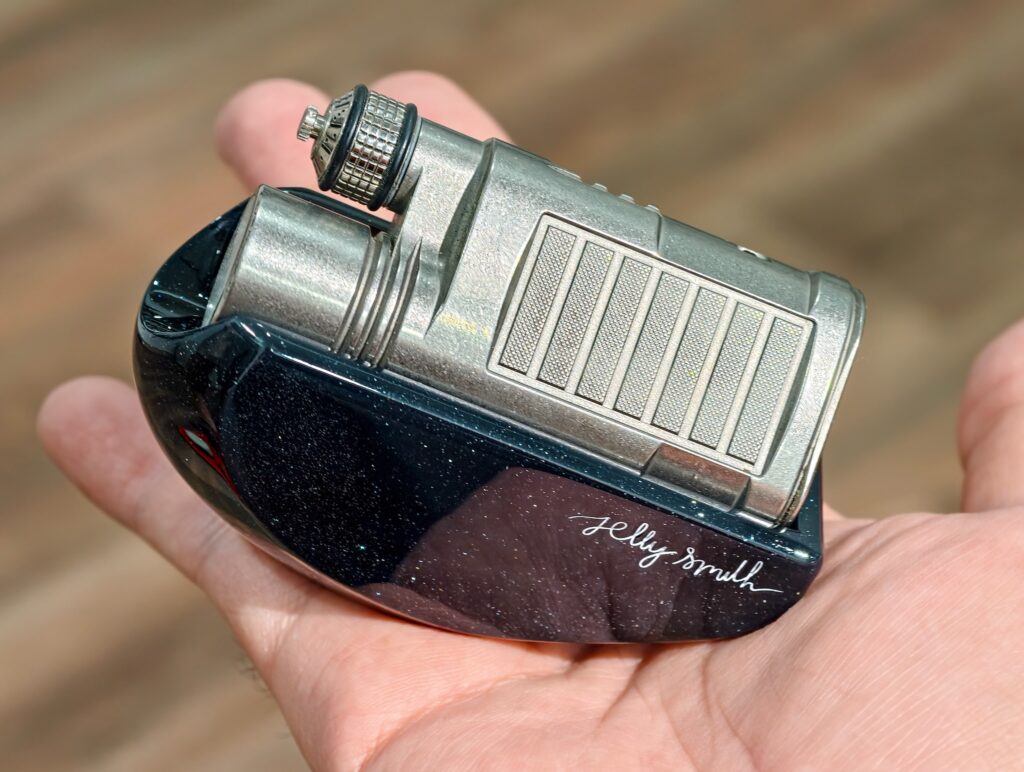
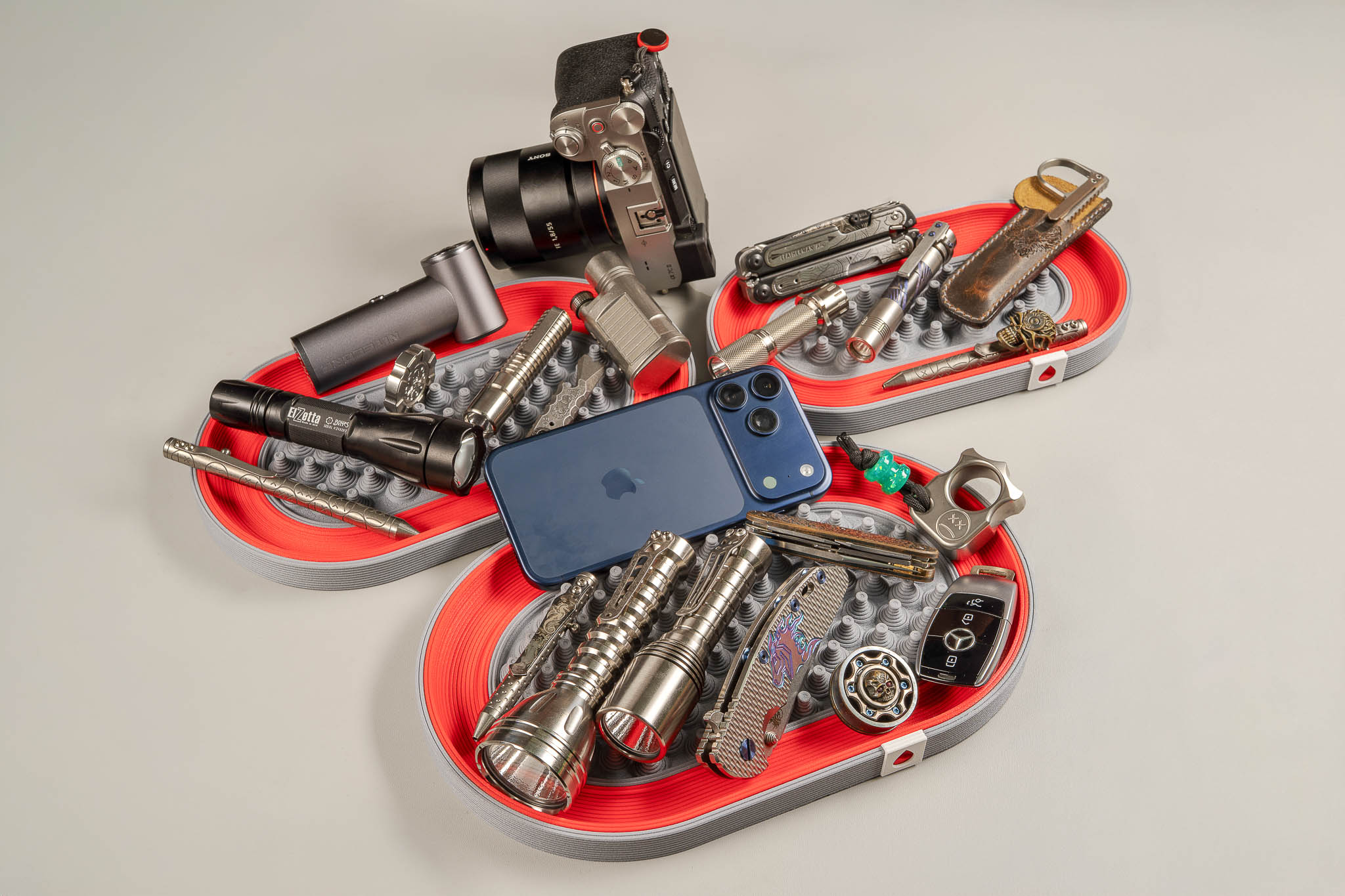
DROP is a project I’ve been quietly working on for almost a year. During that time, I shared the idea with a few close friends and went through more than 20 prototype iterations. At its core, DROP is an EDC tray—a place to put down everything you carry every day the moment you get home. Just drop it in. No arranging. No overthinking. No worrying about scratching the gear you actually care about.
Structurally, DROP is made up of six parts. The main body consists of three plates that form the tray itself (two gray plates and one red plate). There are also three secondary components: two logo pieces and one brown logo piece mounted on the bottom. The two circular cutouts are designed to hold rubber rings that prevent slipping, and they’re intentionally made to be easily replaceable over long-term use.
To keep the tray durable while controlling production costs, I use an industrial-grade 3D printer with glass-fiber-reinforced polymer. Depending on the size, the finished tray weighs roughly 300 to nearly 500 grams (about 9.7 oz–16.4 oz), giving it a solid, reassuring heft when you pick it up.
Design-wise, the tray is divided into layered functional zones. The innermost section features rounded pillars that guide items like flashlights, knives, and pens into grooves where they naturally settle—no rolling, no tipping over. The next layer provides space for a phone, car keys, or even larger flashlights. The outermost layer acts as a protective frame, reinforcing the overall structure and adding rigidity.
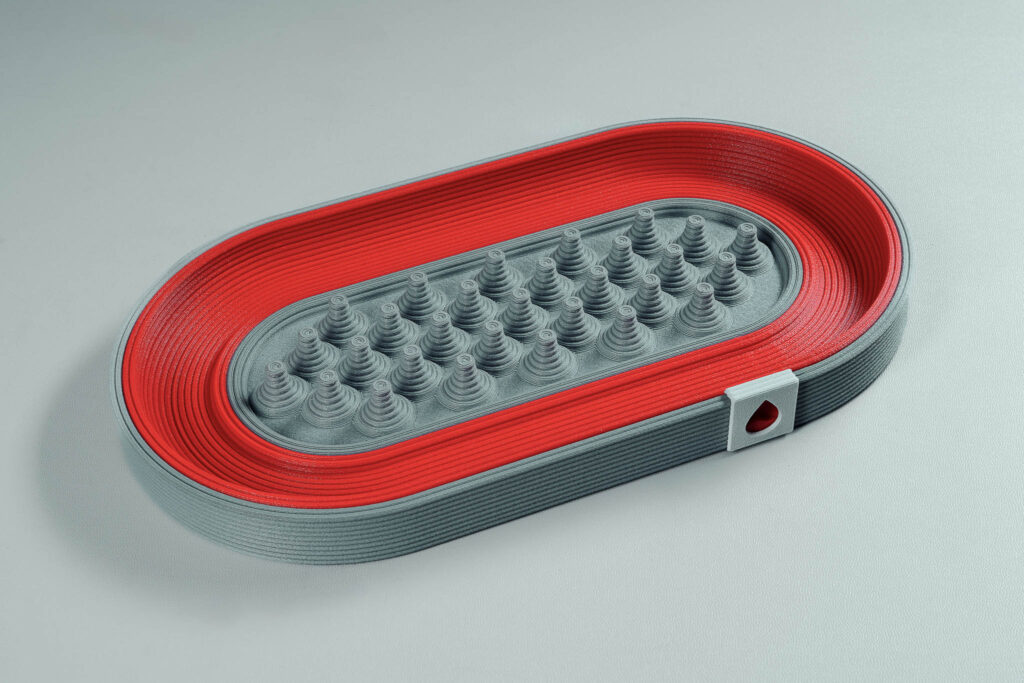
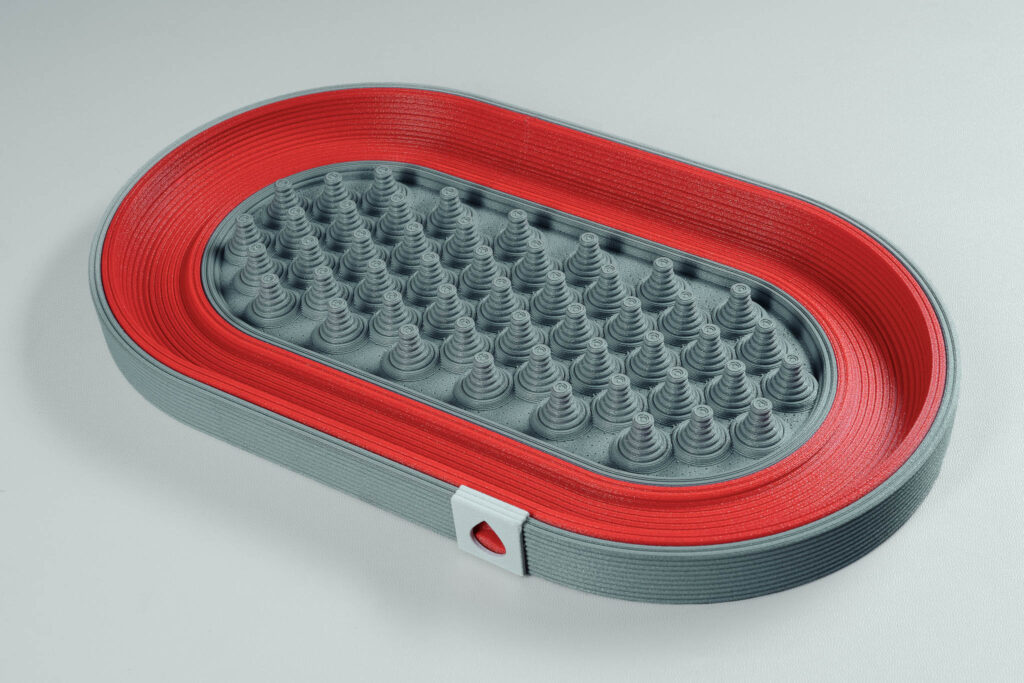
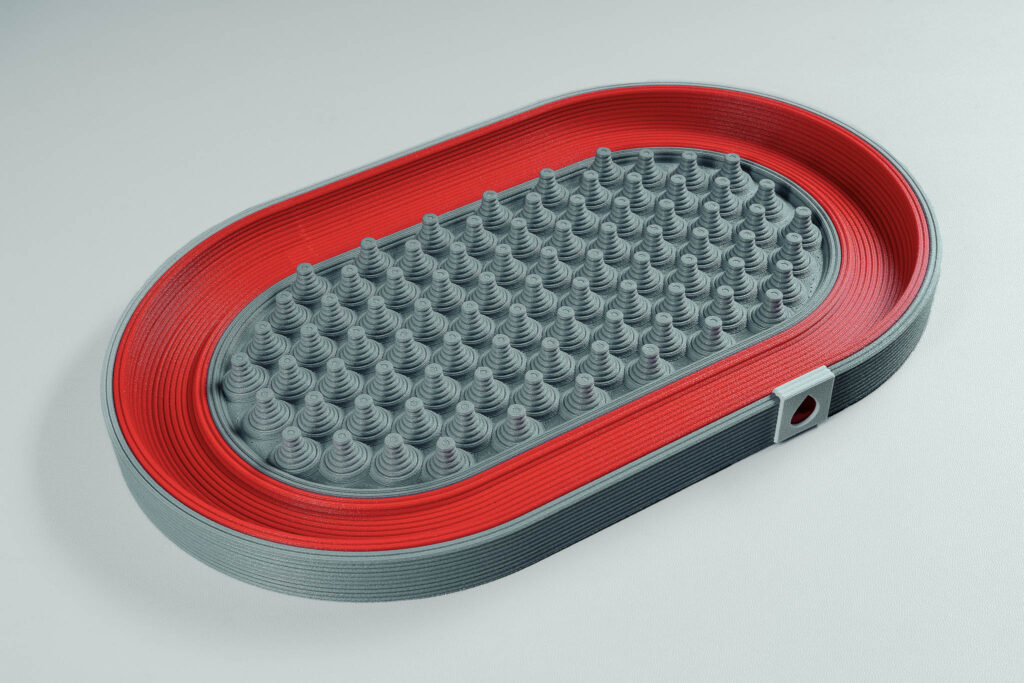
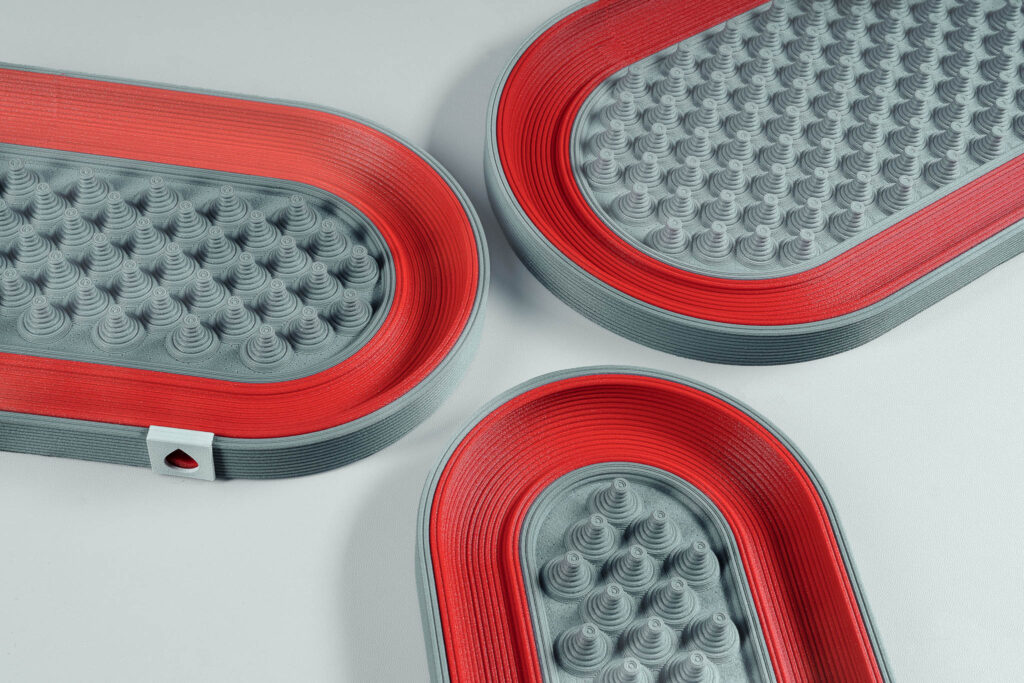
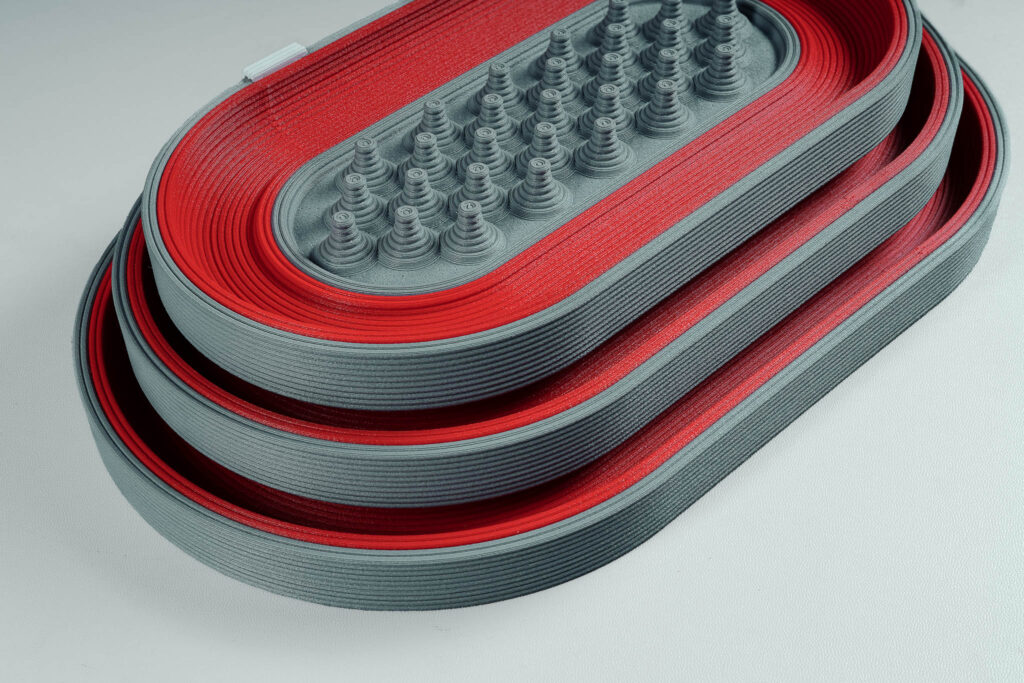
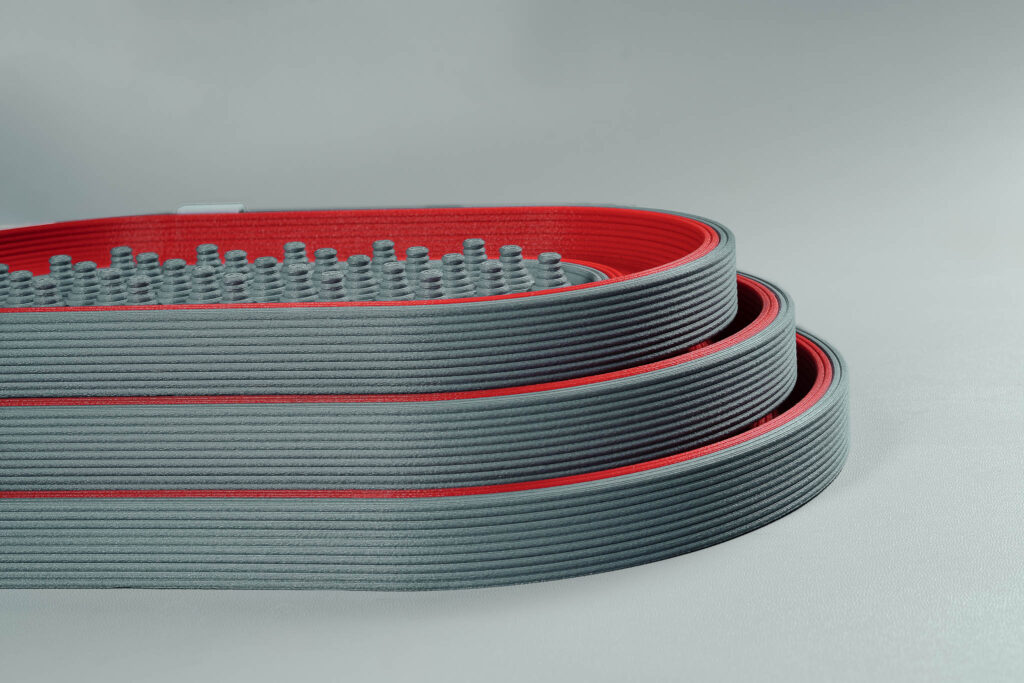
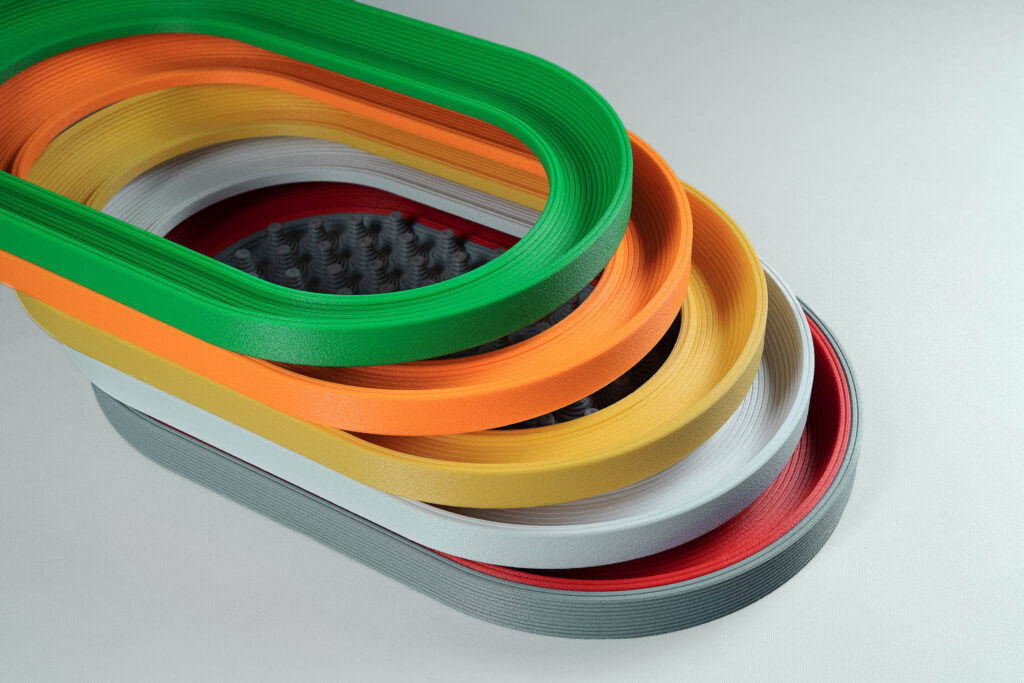
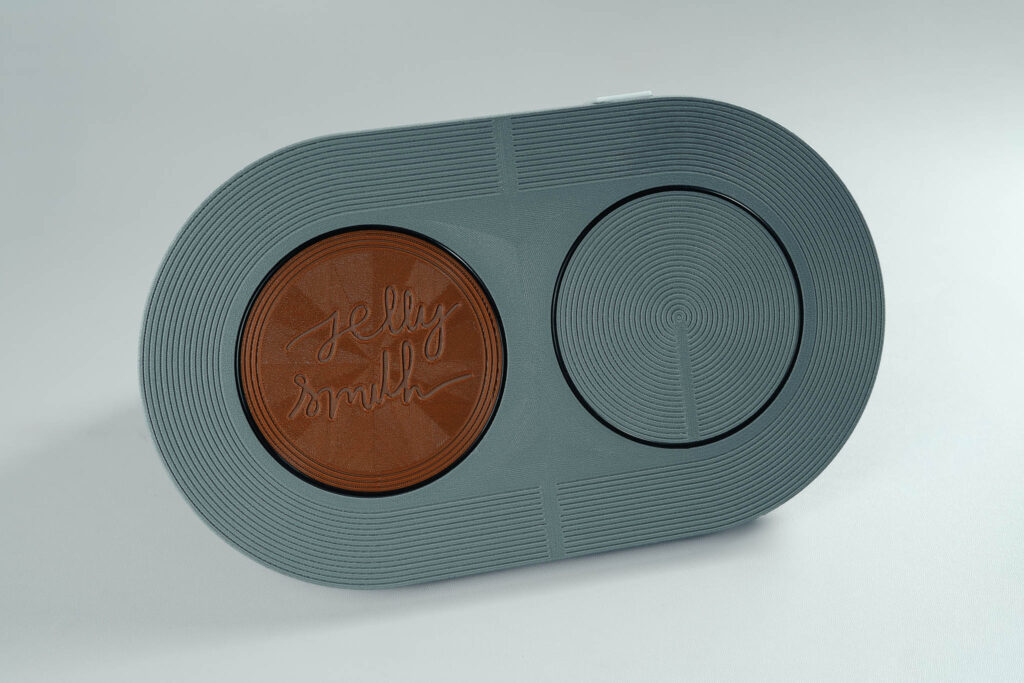
The overall concept was inspired by stadium architecture—everything organized in concentric rings, with a sense of rhythm and protection. The center plate can be customized in different colors to suit personal taste. On the underside, two circular elements complete the structure: the inner ring holds the Jelly Smith logo and locks all tray layers together, while the outer ring features the droplet logo. In daily use, the tray feels extremely solid, stable, and built to last.
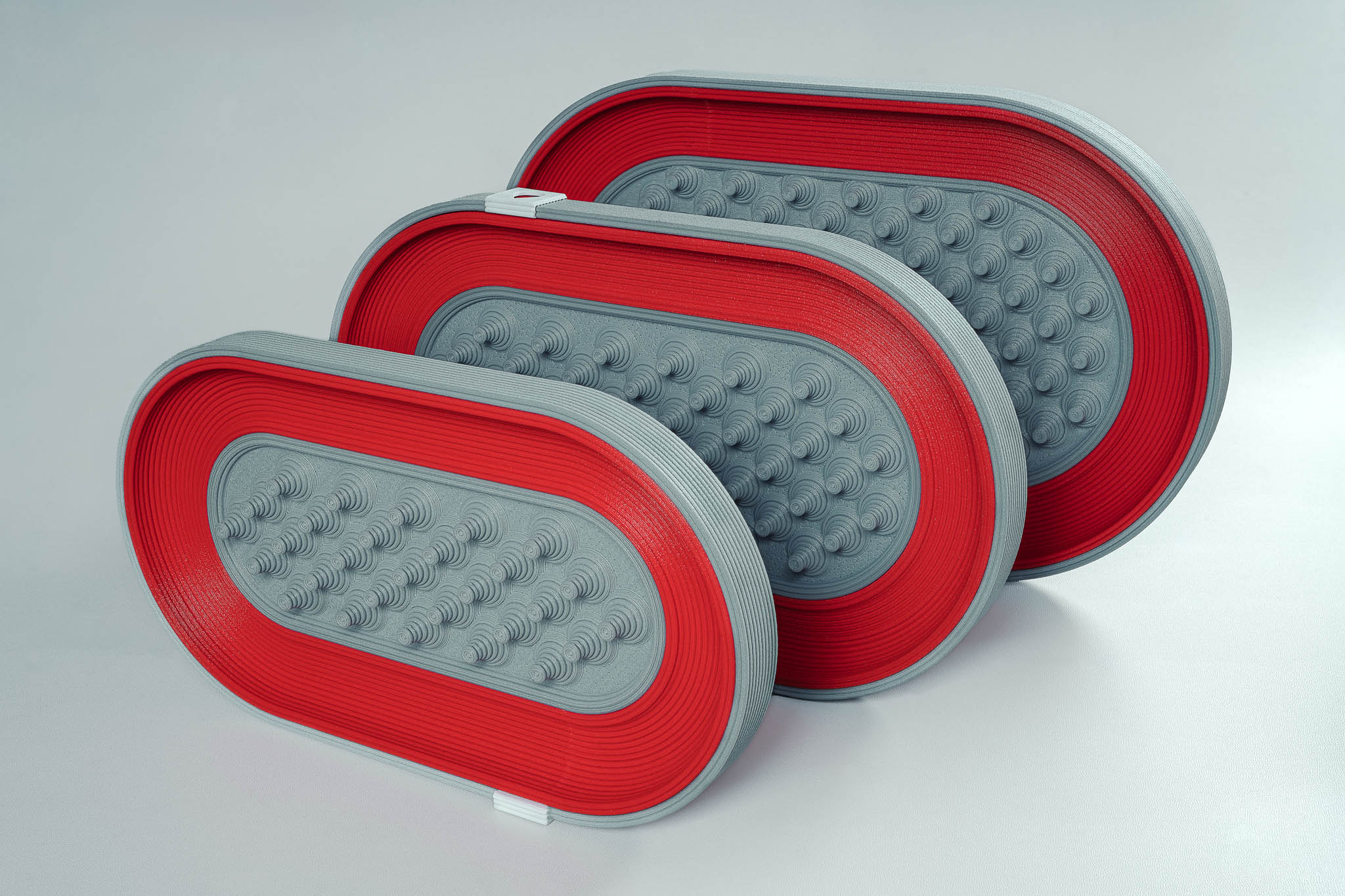
Specifications
Material: Glass-fiber-reinforced PETG (PETG-GF)
Dimensions & weight:
- S
- 243 × 133 × 19 mm
- (9.6 × 5.2 × 0.75 in)
- Weight: 276 g (9.7 oz)
- M
- 267.5 × 157.5 × 19 mm
- (10.5 × 6.2 × 0.75 in)
- Weight: 369 g (13.0 oz)
- L
- 297.5 × 182.5 × 19 mm
- (11.7 × 7.2 × 0.75 in)
- Weight: 464 g (16.4 oz)